
Leaks at penetrations and flashings
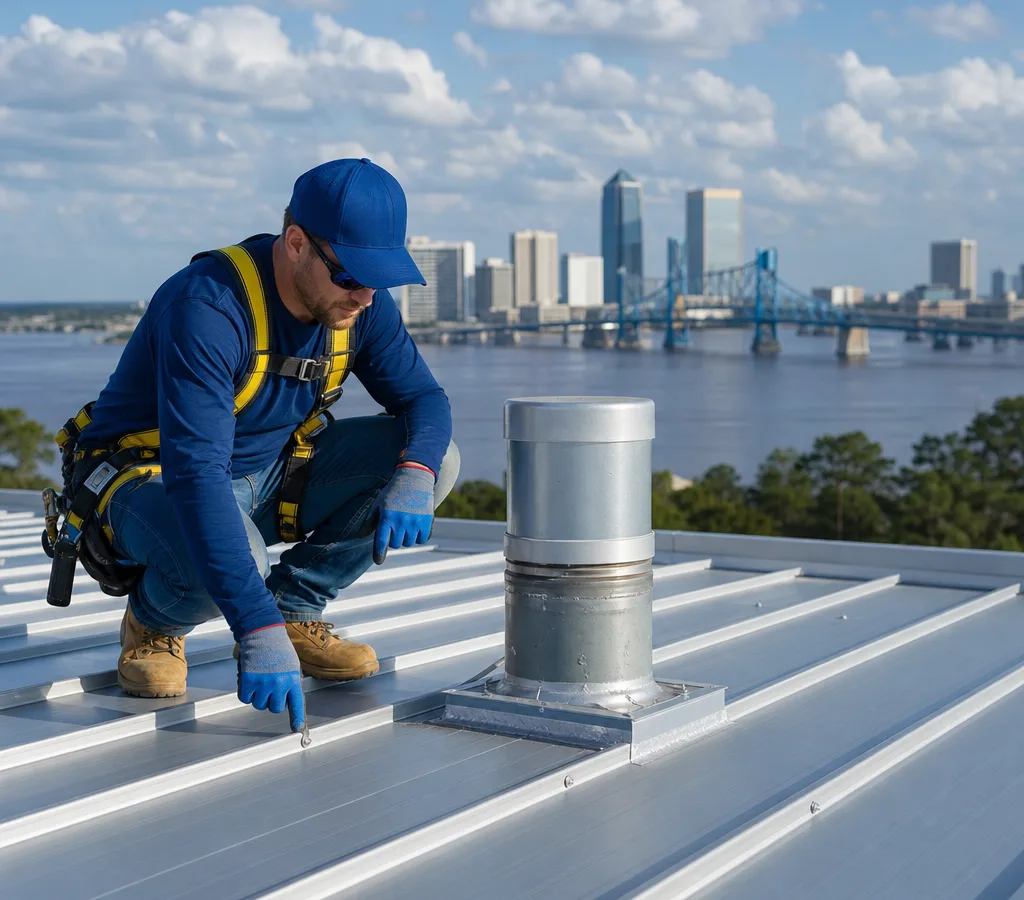
Pipe boots, vent stacks, skylights, and mechanical curbs are common entry points. We inspect the boot condition, clamp fit, sealant compatibility, and the way the flashing is integrated with the panel profile.
Serving Jacksonville, Florida & surrounding areas
Mon–Sat · 7am–7pm
Stop leaks, loose panels, and storm damage before they spread. Get a clear inspection, a written scope, and repairs that match your roof's system and Florida weather.
When you search for jacksonville metal roof repair, you are usually dealing with one of a few high-stakes issues: a leak around a penetration, wind-lift at an edge, backed-out fasteners on exposed-fastener panels, or seam movement after heat cycles. In Jacksonville, add coastal humidity, heavy rain events, and seasonal storm winds and you can go from a minor drip to soaked insulation, deck staining, or interior damage quickly.
Jacksonville FL Metal Roofing repairs metal roofing systems across Jacksonville, FL, with a focus on finding the actual source of water entry, not just the spot where it shows up inside. Metal roofs can leak uphill from the stain line, travel along ribs or purlins, and enter at transitions.
A real repair starts with diagnosis, then uses compatible materials, correct fastening patterns, and manufacturer-appropriate sealants and closures.
If you are still comparing contractors, a good rule is simple: metal roof repair is not the same as shingle patching. The right fix accounts for panel profile, gauge, coating, thermal movement, and how the roof is detailed at eaves, hips, ridges, and penetrations.
Pipe boots, vent stacks, skylights, and mechanical curbs are common entry points. We inspect the boot condition, clamp fit, sealant compatibility, and the way the flashing is integrated with the panel profile.
On exposed-fastener roofs, washers can degrade and screws can back out after movement and wind. We replace them with correctly sized fasteners, set them properly, and address elongated holes when present.
Standing seam and through-fastened panels rely on tight seams and properly detailed laps. We correct separation, add closure where needed, and use methods that allow expansion and contraction.
Rakes, eaves, and wall transitions take the brunt of uplift. We re-secure trim, check drip edge details, and reinforce vulnerable areas when the original install leaves weak attachment.
Surface oxidation can be manageable, but active rust at fasteners, cut edges, or ponding zones needs preparation and the right primer and coating system. We explain what is repairable versus what needs panel replacement.
Not all moisture is a roof leak. We look for sweating under panels, wet insulation, and air leakage pathways so you do not pay for the wrong fix.
A reliable metal roof repair jacksonville fl starts with tracing the pathway, not guessing. We begin by checking the easiest failure points first: penetrations, transitions, sealant joints, closures, and fastener lines. Then we look for clues that point to movement or uplift, like oil-canning near seams, missing stitch screws, or distorted trim.
We also pay attention to details that are specific to metal roofs:
Jacksonville's heavy rain can push water sideways at vulnerable edges, and wind-driven rain can exploit tiny openings at flashings. That is why repairs that rely on surface caulk alone often fail. When the right fix is a new boot, a properly formed flashing, a corrected lap, or replacing a damaged panel section, we will say so plainly and put it in writing.
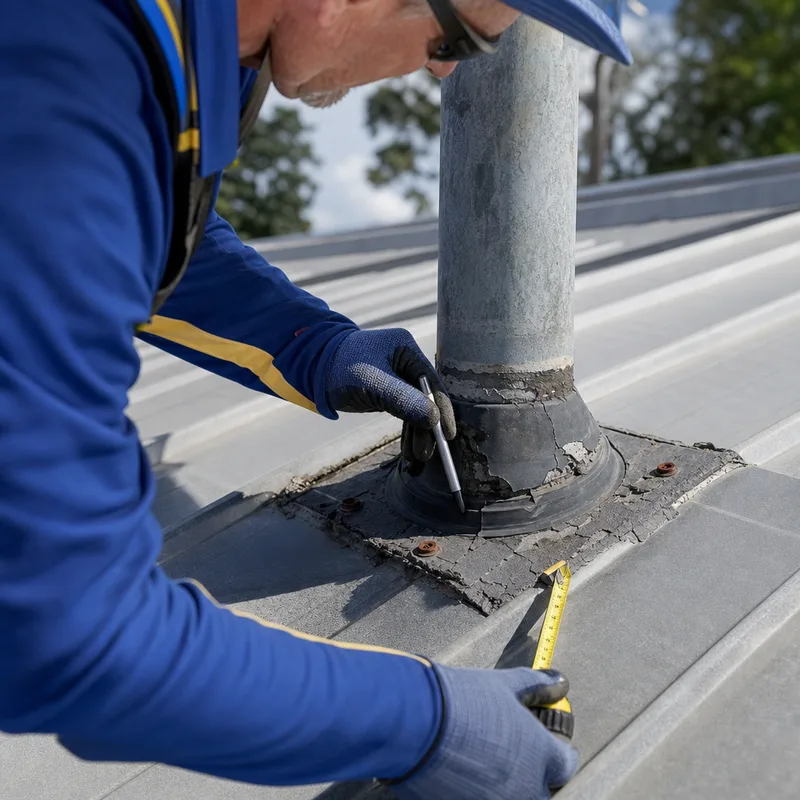
We evaluate the roof type, access points, and visible failure areas. If the issue is active leaking, we focus on likely entry points and how water could travel under panels or along seams.
You get a clear explanation of what failed, what we recommend, and what materials and details we will use. If more than one approach is reasonable, we outline the tradeoffs.
We use fasteners, sealants, closures, and flashing methods suited to metal roofing. The goal is a repair that survives heat cycling, rain, and wind, not a short-term patch.
After repairs, we re-check surrounding details that commonly fail next, like adjacent fastener lines or nearby penetrations. We also share practical maintenance intervals for inspections after major storms.
Metal roofing is used on homes, coastal properties, and commercial buildings across the Jacksonville area, and the repair needs often track with exposure and building style.
Near the Intracoastal and beachside communities, wind-driven rain and salt-laden air can accelerate corrosion at cut edges, fasteners, and accessories when coatings are compromised. In Downtown Jacksonville, penetrations for HVAC and exhaust are common, and leaks often trace back to curb details, pitch pockets, or aged boots.
In older neighborhoods such as Riverside and San Marco, additions can create tricky transitions where metal meets other roof sections or walls. In Arlington and other established residential areas, exposed-fastener systems on porch additions or detached structures often need fastener and washer replacement after years of heat cycles.
Tree debris in valleys and behind equipment can hold moisture against metal surfaces and stress coatings. After a major wind event, check edges, ridge caps, and trim that can lift first. If repair is the right move, our work focuses on keeping the existing system performing safely.
Most metal roof repair jobs in Jacksonville typically range from about $350 to $1,500, while larger repairs involving multiple leak points, significant flashing replacement, or panel removal often run $1,500 to $4,500+. Small fixes like replacing a pipe boot or a limited fastener line are usually at the lower end.
Final price depends on roof height and pitch, safe access, the roof type (standing seam vs exposed-fastener), how far water traveled, and whether damaged decking or insulation is discovered. After an on-site inspection, we confirm the exact scope and cost in writing before work starts.
“We had a leak that kept showing up in the same hallway after heavy rain. They traced it to a penetration uphill from the stain, replaced the boot, and corrected the fasteners nearby. It has stayed dry through multiple storms.”
“Our standing seam roof was fine for years, then we started getting water at a wall transition. The repair was straightforward and they explained why a simple surface seal wasn't going to hold up long term.”
Yes, many metal roof issues can be repaired without full panel replacement, especially fastener failures, flashing leaks, and localized seam or end-lap problems. If the panel itself is torn, heavily corroded through, or deformed in a way that prevents proper sealing, replacing a section or the affected panels may be the correct fix.
The most common causes are failing pipe boots and penetration flashings, backed-out fasteners on exposed-fastener systems, separation at laps or seams, and edge or trim lift after high winds. Jacksonville's intense rain and wind-driven storms make small detailing weaknesses show up quickly.
Usually no, because many general-purpose mastics and caulks do not stay adhered through metal movement and heat cycling, and some are not compatible with certain coatings. A durable repair uses the right flashing detail plus sealants and tapes designed for metal roofing.
We inspect uphill from the interior stain line and follow the roof's drainage and panel geometry, since water can travel along ribs, under laps, or around penetrations before dropping inside. We focus on seams, fastener lines, and transitions in the direction water would be pushed during heavy rain and wind.
Yes, but the repair approach differs. Standing seam repairs often involve seam-related details, clips, transitions, and penetration flashings, while exposed-fastener repairs commonly involve fastener and washer replacement, treating elongated holes, and reworking laps and closures.
As soon as you can safely do so, because small openings at edges, ridge caps, and penetrations can become active leaks in the next heavy rain. If you notice new drips, ceiling spots, or lifted trim after a storm, an inspection helps prevent secondary damage to insulation, decking, and interior finishes.
Tell us what you are seeing and where it is happening. Jacksonville FL Metal Roofing will confirm the source, outline the repair, and help you protect your property with a clear plan.