
A written scope you can verify
Look for specifics: tear-off plan, decking checks, underlayment type, flashing details at walls and chimneys, and how pipe boots and vents will be sealed.
Serving Jacksonville, Florida & surrounding areas
Mon–Sat · 7am–7pm
Get a clean, well-planned metal roof install or repair that holds up to Florida heat, heavy rain, and coastal wind. We inspect, explain your options in plain language, and provide a written scope you can compare.
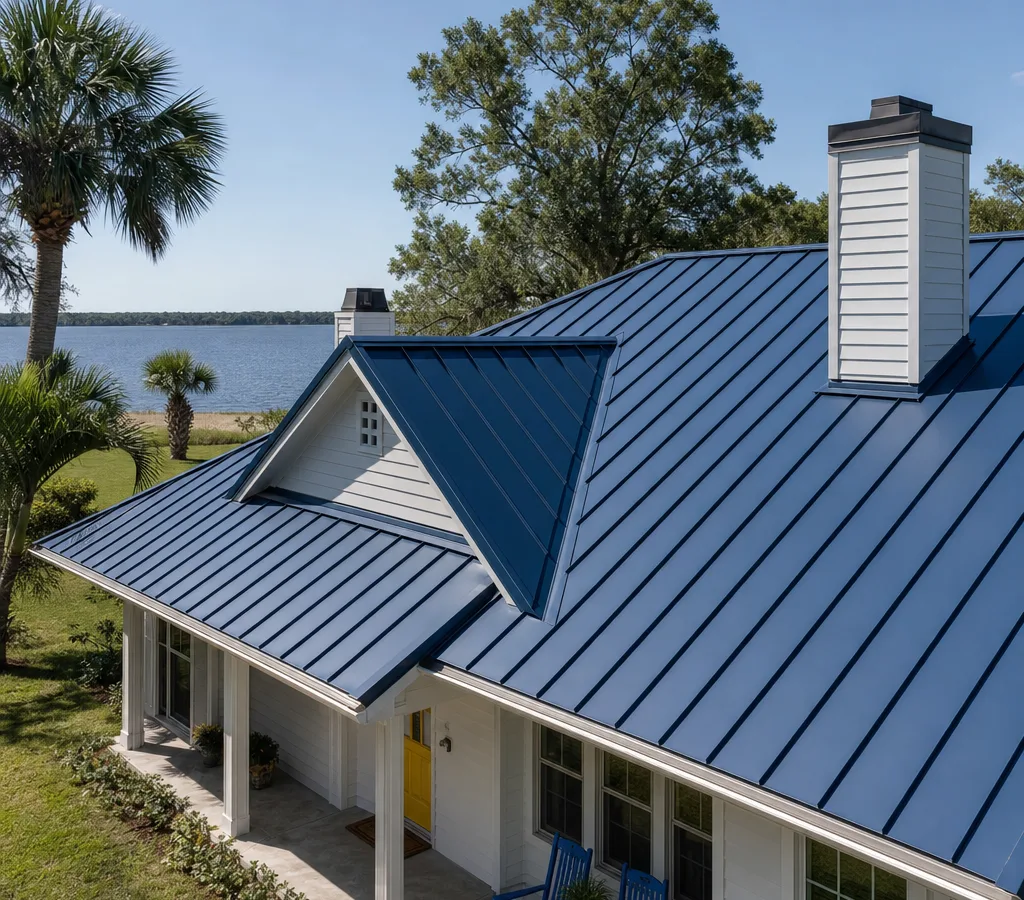
If you are searching for metal roofing contractors Jacksonville FL homeowners trust, focus on the details that decide whether a roof stays dry during a Northeast Florida downpour: correct underlayment, properly detailed penetrations, and flashing that is matched to the roof type.
Jacksonville has a mix of older neighborhoods with complex rooflines and newer builds with simpler geometry. A metal roof can work on both, but the approach changes. In Springfield and Riverside you may see older decking and more valleys and transitions that require careful layout and extra trim work.
In Southside and Mandarin, many homes have larger, simpler planes where clean panel runs and consistent fastening patterns make a big difference. Around the Beaches, salt air raises the stakes on material selection and fastener quality.
Our team at Jacksonville FL Metal Roofing handles metal roof installation, replacement, and repairs with a straightforward process: inspect, document what we find, explain what is required versus optional, and build the scope around your roof's actual conditions. If you are also comparing broader options for metal roofing in Jacksonville FL, we can walk you through profiles and finishes in the context of your home's slope, ventilation, and how water moves across the roof.
Look for specifics: tear-off plan, decking checks, underlayment type, flashing details at walls and chimneys, and how pipe boots and vents will be sealed.
Most leaks start at penetrations, transitions, and edges. The fix is not more sealant; it is the right boot, flashing, and fastening method for the panel system.
Roofing is loud and messy, but it should not feel chaotic. Staging, debris control, and daily cleanup protect landscaping, driveways, and entry areas.
A good contractor explains when a targeted repair is realistic and when repeated leaks point to systemic issues like failed flashing details or underlayment breakdown.
For larger projects, you want a contractor who can align the scope with local requirements and provide documentation that matches the work performed.
In Florida, crews plan around sudden storms. The job should include a plan for dry-in and secure overnight protection if weather turns.
Not all metal roofs install or repair the same way, and that is why a quick “patch” can fail when it ignores the system.
Common systems include standing seam and exposed-fastener panels. Standing seam relies on concealed clips or concealed fastening with engineered seams, so repairs often focus on seam integrity, terminations, and flashing transitions. Exposed-fastener panels depend on the condition of fasteners and washer seals, panel laps, and how penetrations are booted and sealed.
On any system, the roof edge and terminations do the heavy lifting. Drip edge, rake trim, ridge cap, and wall flashing need to direct water out and away while allowing the roof to move with heat. Metal expands and contracts daily in Jacksonville's sun. If movement is trapped at details, fasteners can back out, seams can stress, and sealants can fail early.
When we inspect your roof, we look for the root cause. That includes checking for soft decking, missing closure strips, aged pipe boots, improper fastener patterns, and signs that water is tracking under trim. You get a plan built around how your roof is actually assembled, not a one-size-fits-all repair.
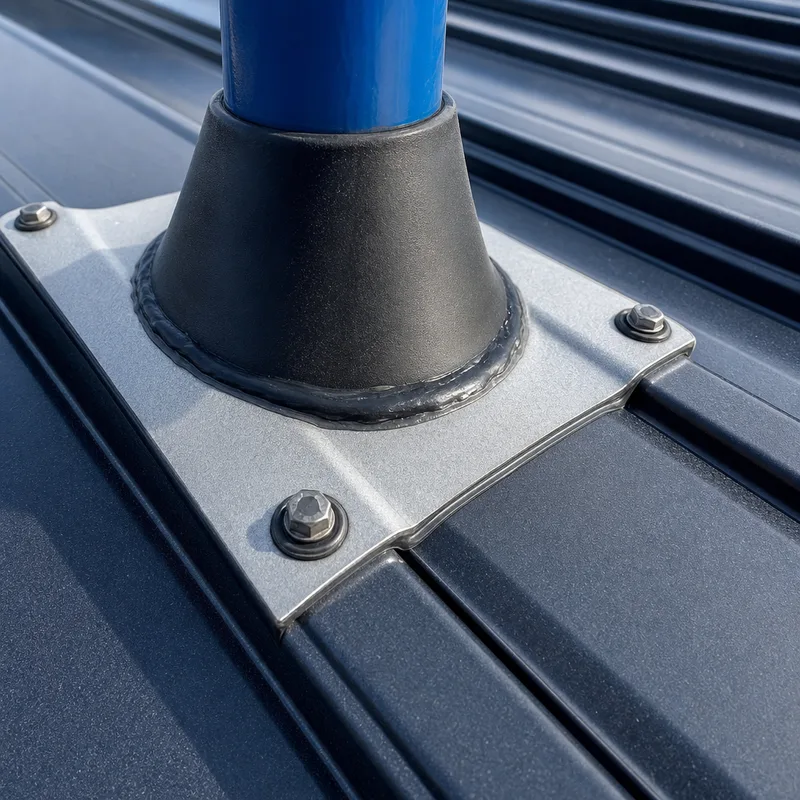
We check panel condition, flashing, penetrations, transitions, and attic/ventilation signals where accessible. We also measure for accurate material takeoffs.
You receive a written scope with recommended work and any alternates that make sense. We call out assumptions so comparisons are fair across bids.
We stage materials, protect landscaping and access points, and confirm where debris will be managed. If tear-off is involved, we plan for safe disposal.
We complete the agreed scope: underlayment, panels, trim, flashing, and penetration details. For repairs, we address the cause, not just the stain.
We verify critical details, clean up, and review what was done so you know what was repaired or replaced and what to watch over time.
Most Jacksonville metal roof projects typically range from $12,000 to $35,000+, with smaller, simpler roofs often closer to the low end and larger or more complex rooflines higher. Targeted metal roof repairs are commonly $350 to $1,800+, depending on access and what must be rebuilt.
Your price depends on roof size and slope, tear-off needs, decking repairs, panel type (standing seam vs. exposed-fastener), underlayment choice, number of penetrations and transitions, and how much new flashing and trim is required. The exact cost is confirmed after an on-site inspection and measurements.
“We had a leak that kept coming back around a vent. They showed us where water was actually tracking under the trim and rebuilt the boot and flashing. The repair was clean and the next heavy rain stayed dry.”
“The estimate was detailed enough that I could compare it to two other bids without guessing. The crew protected the driveway and picked up metal shavings at the end of each day.”
Yes, a properly installed metal roof system can perform very well in Northeast Florida, but performance depends on the attachment method, edge and termination details, and correct flashing. During inspection we pay special attention to ridges, rakes, eaves, and penetrations because those are common failure points when wind-driven rain hits.
Often, yes, as long as the leak is coming from a localized issue like a failed pipe boot, damaged flashing, or compromised fasteners and laps. If the roof has widespread fastener back-out, repeated seam failures, or chronic water tracking under multiple edges, replacement or a larger rebuild of trim and underlayment may be more cost-effective.
Penetrations (vents, stacks, skylights), wall transitions, valleys, and poorly terminated edge trim are common problem areas. In Jacksonville, sudden heavy rain can expose small detailing mistakes quickly, especially where water concentrates and runs across transitions.
Standing seam is often chosen for its concealed fastening approach and clean look, while exposed-fastener panels can be a practical option on certain homes and budgets. The right choice depends on your roof geometry, how many penetrations and transitions you have, and whether long-term fastener maintenance fits your expectations.
Many residential installs take several days to about a week, but timing depends on roof size, complexity, tear-off requirements, decking repairs, and weather windows. We plan for dry-in so your home is protected if a storm pops up mid-project.
With typical residential assemblies (solid decking plus underlayment), most homeowners report normal sound levels similar to other roofing types. Noise concerns are more common with open framing or certain outbuilding installs, and we can explain what your roof's current deck and underlayment setup means for sound.
Tell us what you are seeing (leak location, age of the roof, and any recent storm issues) and we will schedule an inspection in Jacksonville, review your options, and provide a written estimate you can trust.