Perimeter reinforcement
Wind loads concentrate at corners and edges. Strengthening eave and rake detailing, starter conditions, and termination methods often improves real-world performance more than changing the panel alone.
Serving Jacksonville, Florida & surrounding areas
Mon–Sat · 7am–7pm
One call instead of ten No web forms, no callback spam Booking Fall & Winter 2026
If your roof has to ride out tropical storms and hurricane-force gusts, the details matter: tested panel profiles, attachment patterns, edge metal, and a code-ready deck-to-panel system. Get a clear plan for improving wind resistance on your Jacksonville home or building.
✓ Skip the 3-hour Google rabbit hole — we’ve already done the vetting
✓ One conversation, not ten voicemails and seven web forms
✓ 24/7 response — talk to a real person who actually knows Jacksonville Metal Roofing
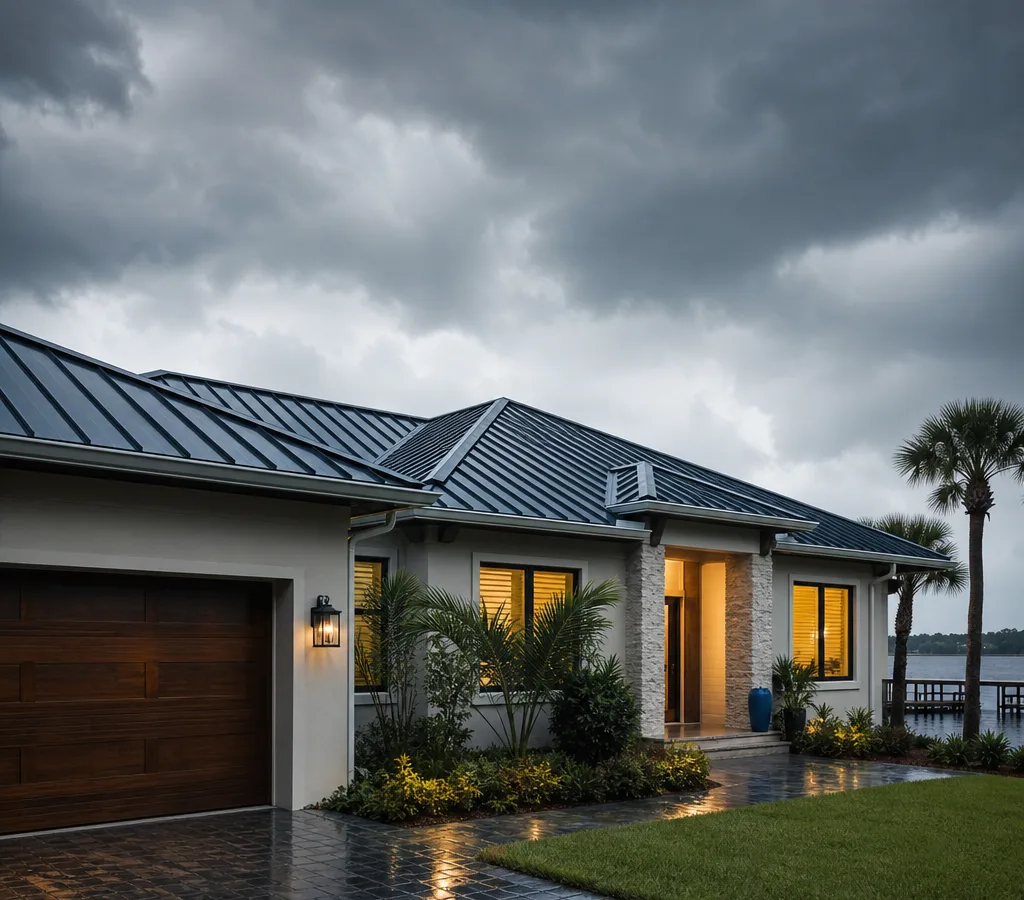
Metal roof hurricane wind perfomance jacksonville fl searches usually come down to one question: will the roof system stay attached when wind pressure and uplift spike during a coastal storm? The answer depends on the whole assembly, not just the panel.
In Jacksonville, wind concerns show up differently by area. Near the St. Johns River and open marsh edges, gusts can accelerate across unobstructed terrain. In neighborhoods with taller tree canopy and older rooflines, falling limbs and debris impact become part of the risk picture.
Metal performs best when it is engineered and installed as a system: deck condition, underlayment selection, fastener schedule, clip type, edge detailing, and how penetrations are flashed.
This guide explains what drives high-wind performance, what to upgrade if your current roof is aging, and what to ask for in a scope of work so the finished roof aligns with Florida building code requirements used for permitting and inspections.
The strongest-looking panel can still fail in wind if attachment and edges are wrong. For metal roof hurricane wind perfomance in Jacksonville FL, we focus on the same failure points storm damage inspections keep revealing:
When you work with Jacksonville FL Metal Roofing, you get recommendations tied to the actual roof geometry, exposure, and deck condition we see on site, with options that fit the building and budget.
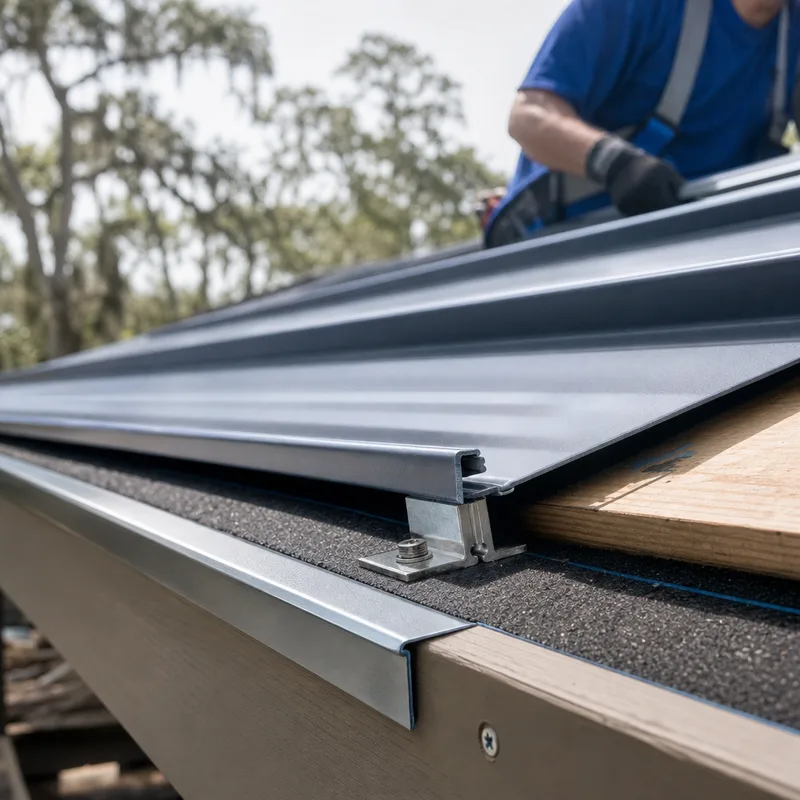
Wind loads concentrate at corners and edges. Strengthening eave and rake detailing, starter conditions, and termination methods often improves real-world performance more than changing the panel alone.
Clip type, clip spacing, and fastener selection should match your roof deck and exposure category. The right schedule reduces the chance of panel flutter and progressive loosening during long wind events.
Soft decking, delamination, and hidden rot lower pull-out resistance. We flag repairs early so the finished system has a solid substrate to anchor into.
Valleys, wall tie-ins, chimneys, and vent stacks are where wind-driven rain finds a path. We use metal-specific flashing details and compatible membranes to keep transitions tight.
Balanced intake and exhaust reduces heat and moisture stress on the roof assembly. It also helps avoid improvised venting that can become a wind weak point.
Wind exposure is not the same across Jacksonville. A home on a more open lot or near wide water can see cleaner, faster wind than a similar roof surrounded by dense development. Roof shape also matters. Hips generally distribute wind differently than long gable runs, and complicated rooflines create more edges, corners, and transitions to detail.
We see practical decision points across the city:
If you are comparing materials and profiles, start with the complete roof system rather than just a panel style so the wind conversation stays tied to deck, attachment, underlayment, edges, and flashing.
We look at roof shape, edge conditions, penetrations, current flashing, and any signs of deck movement or past leakage. We also note exposure factors like open fetch and surrounding structures.
We verify deck type and condition and outline any repairs needed. From there we align the attachment plan—clips or fasteners, spacing, and locations—with the roof geometry and permit requirements for the property.
You get a clear scope that separates must-do items such as deck repairs and required details from optional upgrades including enhanced underlayment, higher-grade edge metal, and improved flashing strategies.
We coordinate the work so the roof is installed as a system: underlayment, perimeter metal, field panels, penetrations, and final trim. Details stay consistent so perimeter zones are not treated as an afterthought.
After install, we document key details and explain what to check after major wind events, such as displaced trim, sealant splits at penetrations, or impact damage from debris.
Most hurricane-wind focused metal roof upgrade projects in Jacksonville typically range from about $1,500 to $8,000+, depending on whether the work is limited to perimeter detailing and fastening improvements or expands into partial re-decking, underlayment replacement, and multiple flashing rebuilds. A targeted perimeter and fastener correction is usually at the lower end, while wide-scope corrections during a full reroof run higher.
Final price depends on roof height and access, roof complexity, deck condition, the metal system type—standing seam or exposed fastener—and how many penetrations and wall transitions need to be rebuilt. Exact pricing is confirmed after an on-site inspection and a written scope.
“After the last big wind event we noticed panel noise and a loose edge at the rake. The inspection showed the perimeter details were the real issue. The repair plan was specific about clips, edge metal, and how the underlayment tied in, and the roof feels solid now.”
Tara L.
“We wanted a metal system that would meet permitting requirements without guessing. The crew explained where uplift is worst on our roofline and why the attachment schedule and edge terminations mattered more than the panel color we were stuck on.”
Miguel R.
Standing seam can perform very well in high wind because the fasteners are not exposed and the panels are typically secured with engineered clips, but the outcome still depends on the specific system and how the perimeter zones are detailed. Exposed-fastener panels can also meet code when the fastener pattern, washers, and substrate attachment are correct, but they require more vigilance over time because each fastener is a potential loosening point under repeated wind cycles.
Failures often start at edges and corners because uplift pressures are higher there than in the field of the roof. If drip edge, rake metal, starter conditions, or termination details are weak, wind can get under a panel and create progressive lifting. That is why a wind-performance scope should spell out perimeter materials and attachment methods, not just the panel type.
Yes, in some cases you can improve wind resistance with targeted work such as rebuilding edge metal, correcting fastener or clip schedules in problem areas, and rebuilding flashing at key transitions. The limiting factor is the condition of the existing panels and the roof deck. If the deck is compromised or the metal is at the end of its service life, a full reroof is usually the more reliable route.
A well-installed metal roof system reduces leak risk, but no roof can be promised leak-proof under all storm conditions, especially with wind-driven rain and debris impact. The best protection comes from layered defense: properly lapped underlayment, sealed transitions, and correctly built flashing at valleys, walls, and penetrations, so that minor exterior damage does not immediately become an interior leak.
Permits and inspections drive documentation and installation requirements that directly affect wind performance, such as approved system selection, attachment patterns, and required edge and underlayment details. A code-aligned scope helps the roof get installed the way it was designed, which is when manufacturer requirements and wind-resistance details actually translate into real performance on the building.
Ask for the exact metal system and panel profile, how it attaches—clips or exposed fasteners—the attachment schedule, the underlayment type, and a description of perimeter detailing at eaves and rakes. Also ask how penetrations are flashed, what happens if damaged decking is found, and what post-storm checks you should do to catch small problems before they spread.
Tell us what you have now and what concerns you most. Jacksonville FL Metal Roofing will inspect the roof, identify the wind weak points, and lay out practical upgrade options that align with permitting and inspection requirements.