
Leak risk over time
Standing seam reduces penetrations in the field of the panel, so there are fewer washered fasteners to service. Exposed fastener can perform well, but screws and washers are wear items and need periodic attention.
Serving Jacksonville, Florida & surrounding areas
Mon–Sat · 7am–7pm
One call instead of ten No web forms, no callback spam Booking Fall & Winter 2026
Compare real-world performance in coastal heat, wind, and rain: cost, leak risk, maintenance, and curb appeal so you can choose the metal roof system that fits your building and budget.
✓ Skip the 3-hour Google rabbit hole — we’ve already done the vetting
✓ One conversation, not ten voicemails and seven web forms
✓ 24/7 response — talk to a real person who actually knows Jacksonville Metal Roofing
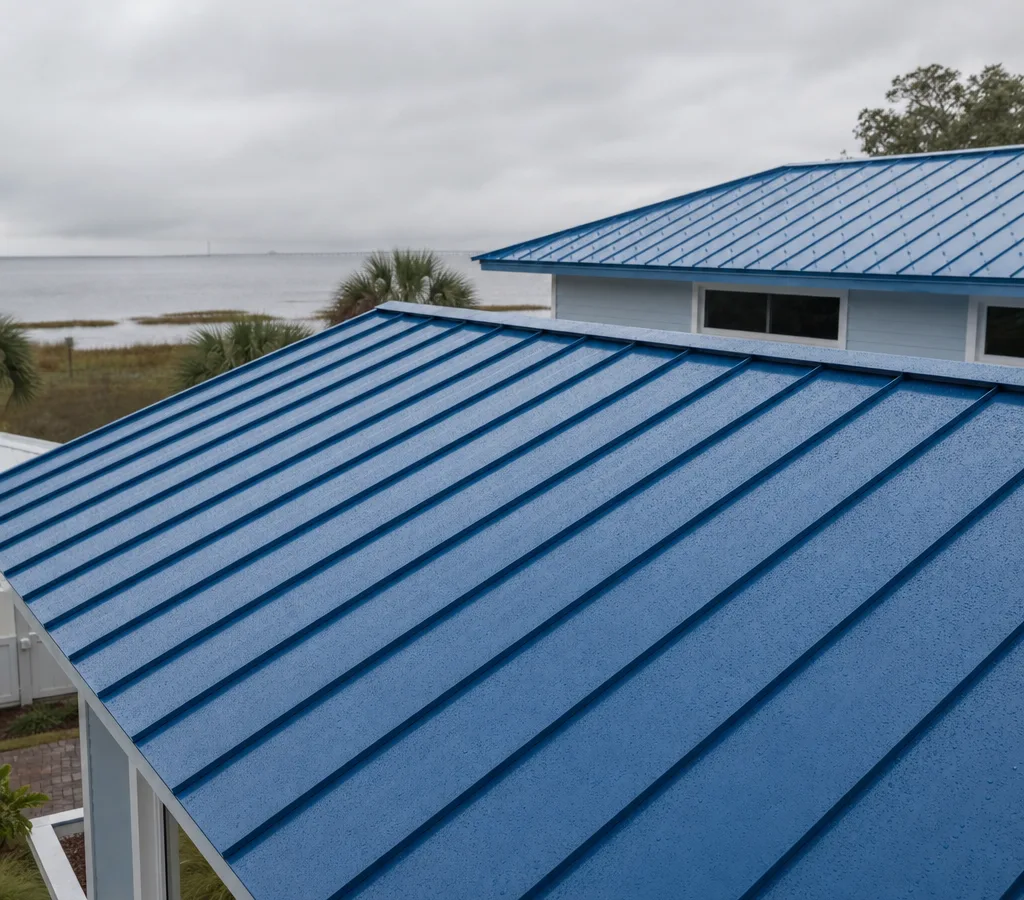
When people search standing seam vs exposed fastener jacksonville fl, they usually want a straight answer: which metal roof will leak less, last longer, and look better on the home or building they actually have. The right choice depends on how the roof is detailed, how it is ventilated, and how it is maintained, not just the panel profile.
In plain terms, standing seam systems hide the fasteners and allow the panels to move with temperature changes. Exposed-fastener systems, often called screw-down metal roofing, use visible screws with washers through the face of the panel. That one difference drives most of the real-world pros and cons.
Jacksonville adds its own realities: strong sun that heats panels daily, sudden downpours that test penetrations and laps, and hurricane-season winds that punish any weak edge detail. On complex roof geometry, panel layout and flashing work can matter as much as the panel type. On simpler rooflines, either system can work when the details are right.
Jacksonville FL Metal Roofing can walk the roof, identify risk points such as valleys, wall transitions, skylights, and vent stacks, then recommend a system based on how your building is built and your maintenance tolerance—not a one-size-fits-all answer.
Standing seam reduces penetrations in the field of the panel, so there are fewer washered fasteners to service. Exposed fastener can perform well, but screws and washers are wear items and need periodic attention.
Exposed-fastener panels are typically the lower-cost option because materials and labor are simpler. Standing seam usually costs more because of the panel profile, clip system, and higher flashing and detail expectations.
Standing seam panels are designed to expand and contract on clips. Screw-down systems can still work, but fastener placement and installation technique matter because the panel moves against the screw points.
Standing seam reads as a higher-end, clean-lined roof, especially on street-facing elevations. Exposed fastener has a more traditional agricultural or utility look, though modern colors can still present well.
Standing seam still needs inspections, but there are fewer field fasteners to revisit. Exposed fastener commonly needs screw re-seating or replacement over the years, especially after major heat cycles and storms.
Jacksonville roofs deal with three things that change the standing seam vs exposed fastener conversation.
First is heat. Metal expands and contracts every day. Standing seam is built around that movement with a clip-and-seam approach. Exposed fastener relies more on correct screw placement, washer compression, and avoiding over-driving, because each fastener is a potential stress point when panels move.
Second is wind. In hurricane season, roof performance depends heavily on perimeter details: eave and rake metal, how the underlayment is integrated, and how transitions are terminated. A premium panel will not save a roof with weak edges.
Third is water. Jacksonville sees intense rain events, and the most common leak sources are often penetrations, valleys, and wall transitions rather than broad fields of panel. The more complex the roof shape, the more the choice depends on how confidently the flashing package can be built and maintained.
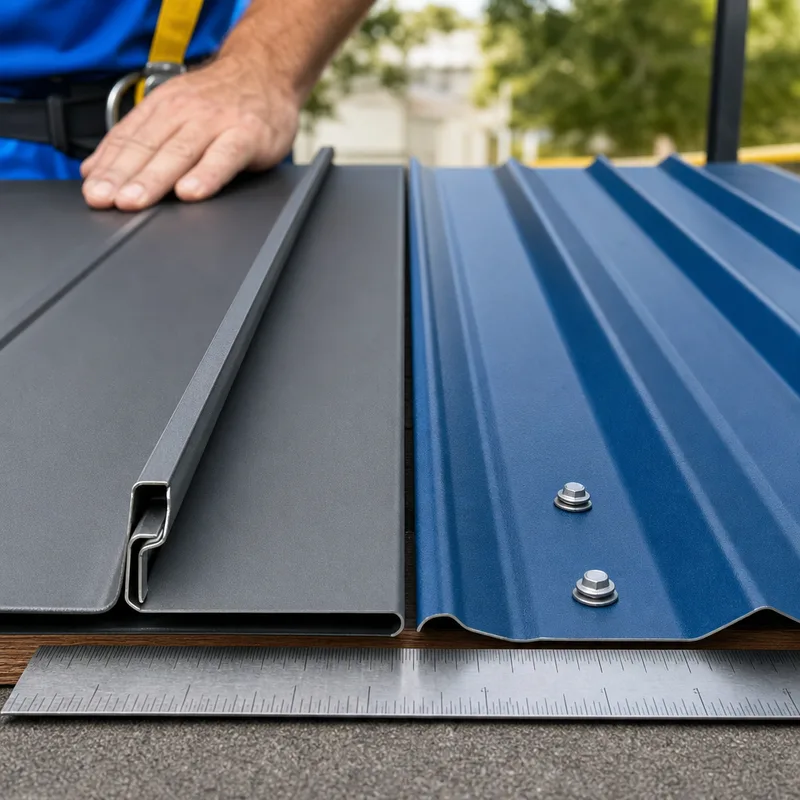
In Jacksonville, exposed-fastener metal roofing typically runs about $7 to $12 per square foot installed, while standing seam commonly ranges from $12 to $20+ per square foot installed. A smaller, simple roof plane tends to land near the lower end; complex geometry, steep pitch, and numerous penetrations push pricing up.
Your final price depends on tear-off versus overlay, underlayment selection, flashings at valleys, chimneys, and walls, panel gauge and finish, ventilation needs, and access for staging and disposal. The exact cost is confirmed after an on-site roof inspection and a written scope.
We review pitch, deck condition, penetrations, and drainage paths, then measure for panel layout so seams and laps land in the right places.
We focus on the spots that cause problems in Northeast Florida: valleys, transitions into walls, skylights, vent stacks, and the eave and rake perimeter.
We discuss whether concealed-clip standing seam or screw-down panels make more sense for your roof shape, your budget, and how much maintenance you want to own.
You get clear options that spell out panel type, underlayment approach, flashing work, and what is included so you can compare bids on the same assumptions.
Whichever system you choose, the job is won or lost at the details: correct fastening patterns, proper trim and closures, and clean, watertight transitions.
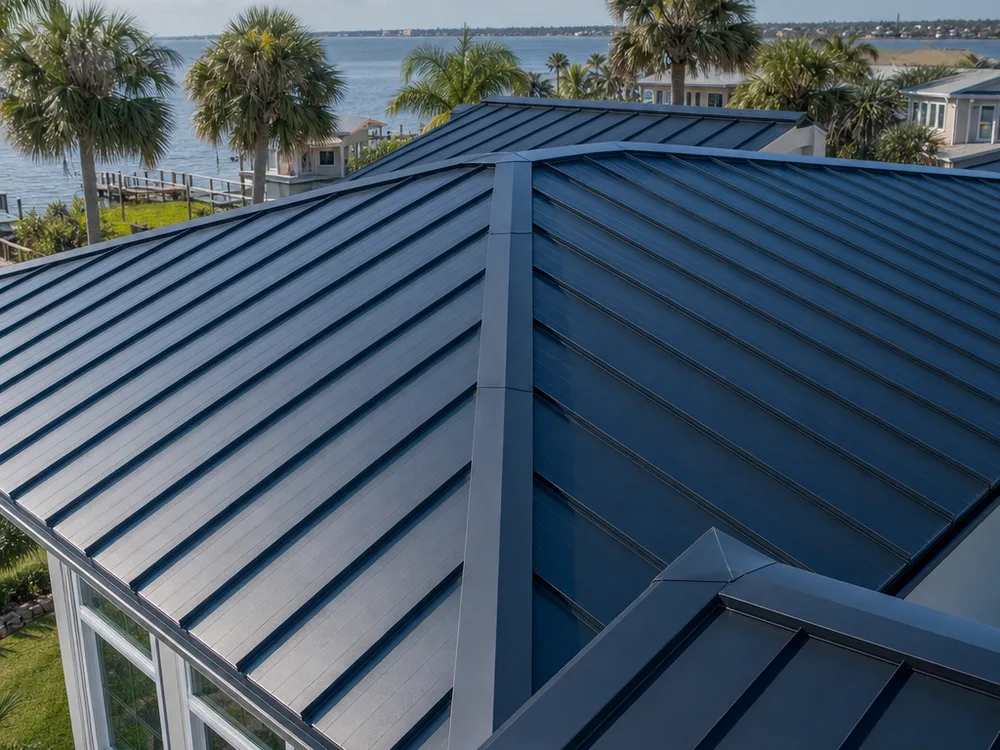
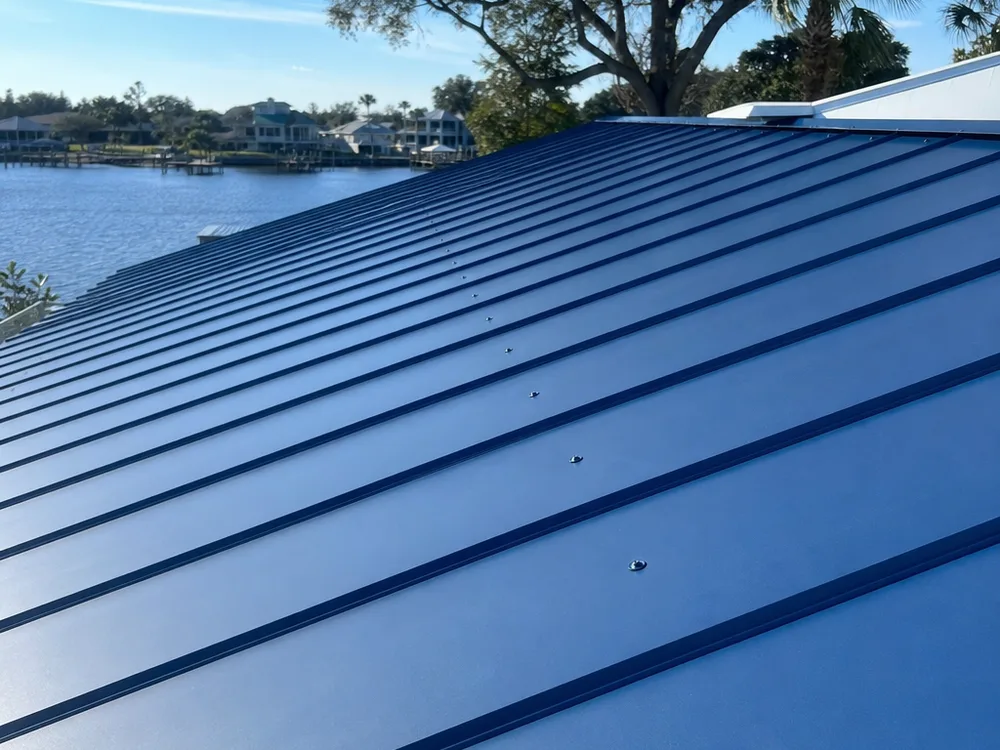
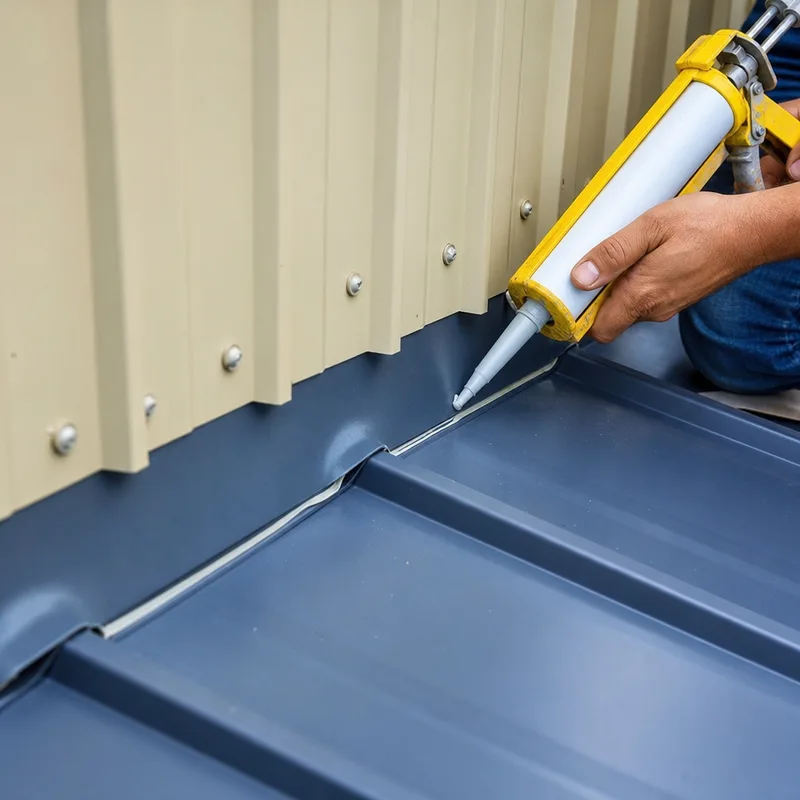
Standing seam is typically less leak-prone over time because the fasteners are concealed and the panel field has fewer penetrations to maintain. Exposed-fastener roofs can still be watertight, but the screws and washers are the long-term service point, especially after years of heat cycling and storm weather.
It often needs periodic fastener service because washers age and screws can back out slightly over time. The timeline varies by installation quality, sun exposure, and wind events, but you should plan for inspections and occasional screw replacement rather than assuming it is maintenance-free.
Standing seam is usually worth it when you want the lowest maintenance path, a cleaner architectural look, or you have a roof design where minimizing field penetrations matters. If your roof has large simple planes and you are comfortable with scheduled inspections, exposed fastener can be a smart budget choice.
Flashing and termination details matter more than panel type on many Jacksonville roofs. Valleys, wall transitions, ridge and hip caps, penetrations, and how the underlayment ties into edges are the places water finds a path, and those details must be built correctly for either system.
Sometimes, but it depends on roof condition, local requirements, and how the assembly will handle moisture and ventilation. A roof inspection is the right first step because trapped moisture, uneven substrates, and unclear fastening into framing can create problems that cost more later.
Compare the full scope, not the panel label. Make sure each quote clearly states tear-off or overlay, underlayment type, flashing scope at penetrations and walls, ventilation changes, trim metals, fastener type for exposed-fastener systems, and how valleys and transitions will be detailed so you are not comparing assumptions.
Share your address and what you want out of the new metal roof—budget, maintenance level, and look. We will review the roof design and give you a written scope that makes the standing seam vs exposed fastener choice straightforward.